



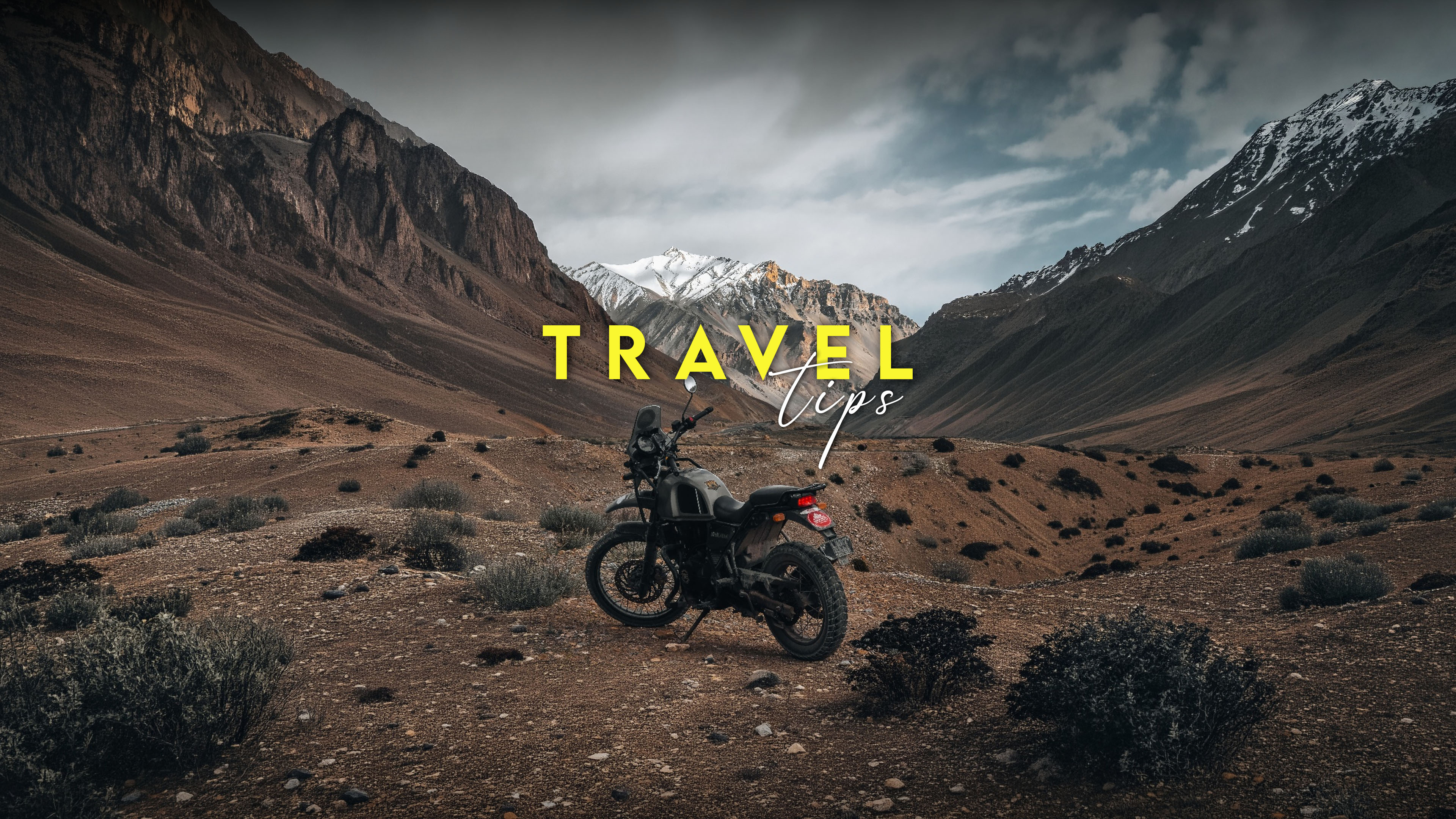
The Dream Riders Field Manual
Every tip here has been earned the hard way — across 17+ years, 10,000+ riders, and some of the most demanding roads on earth. This isn't borrowed advice. It's the exact field knowledge our Ride Marshals use to run safe, unforgettable expeditions through Ladakh, Spiti, Zanskar, Pangi, Tawang, Meghalaya, Rajasthan, South India, Bhutan, Nepal, Sri Lanka and Vietnam. Prepare with it — then ride with us, and let our backup vehicles, mechanics and road captains carry the risk so you can simply enjoy the road.
Packing & Luggage Preparation
Smart packing strategies to balance weight, protect gear from water, and optimize bike balance.
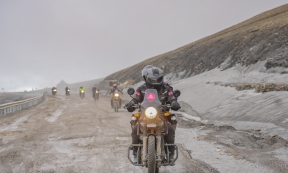 Packing
Packing for a Supported Expedition
Because our backup van carries your heavy bags, you only need a small daypack on the bike.
- Soft duffel for the van; light tank bag or backpack on the bike.
- Keep ID, permits, cash, phone and a warm layer on your body always.
- 100% waterproof roll-top dry bags — mountain rain is constant.
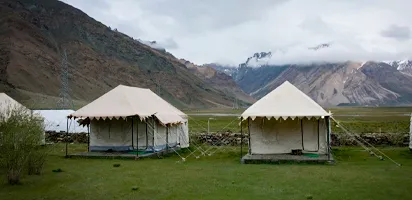 High Altitude
What to Pack for Ladakh, Spiti & High Passes
Above 4,000m the temperature can swing 25°C in a single day. Pack for four seasons in one ride.
- Thermal base layers, a fleece mid-layer and a windproof outer — even in July.
- Sunglasses and high-SPF sunscreen; UV is brutal at altitude.
- Lip balm, moisturiser and eye drops — thin air cracks skin fast.
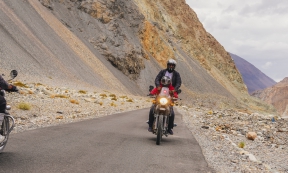 Coastal & Desert
Packing Light for Warm-Weather Tours
Rajasthan, South India, Sri Lanka and Vietnam need the opposite kit — breathable and hydration-first.
- Mesh or ventilated riding gear and moisture-wicking shirts.
- Extra water capacity and electrolyte sachets for tropical heat.
- A packable rain shell for South India, Sri Lanka and Vietnam showers.
Clothing & All-Weather Riding Gear
All-weather protection, armor standards, thermal layering, and rain management for long saddles.
 Layering
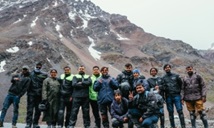
The 3-Layer System for Himalayan Riding
Three layers keep you warm on an 18,000ft pass like Umling La without the bulk that kills mobility.
- Merino wool base layer to wick sweat and hold warmth.
- Windproof fleece or light down mid-layer for insulation.
- Waterproof, windproof outer shell in a high-visibility colour.
 Protection
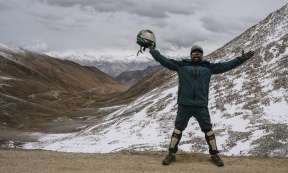
Helmet, Armour & Protective Standards
Your helmet and armour are the only things between you and the road. Don't compromise here.
- A full-face or adventure helmet with an anti-fog Pinlock visor.
- CE Level 2 armour at back, shoulders, elbows and knees.
- Abrasion-resistant textile jacket and pants with removable liners.
 Extremities
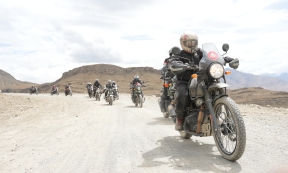
Gloves, Boots & the Small Stuff
Cold hands and wet feet end more Himalayan days than any mechanical fault. Protect your extremities.
- Two pairs of gloves — warm/waterproof for passes, ventilated for valleys.
- Waterproof, ankle-supporting riding boots — never trainers.
- A neck buff or balaclava to seal out wind, cold and dust.
Physical Fitness & Mental Readiness
Build endurance, prevent rider fatigue, maintain focus, and adapt to challenging riding environments.
 AMS Safety
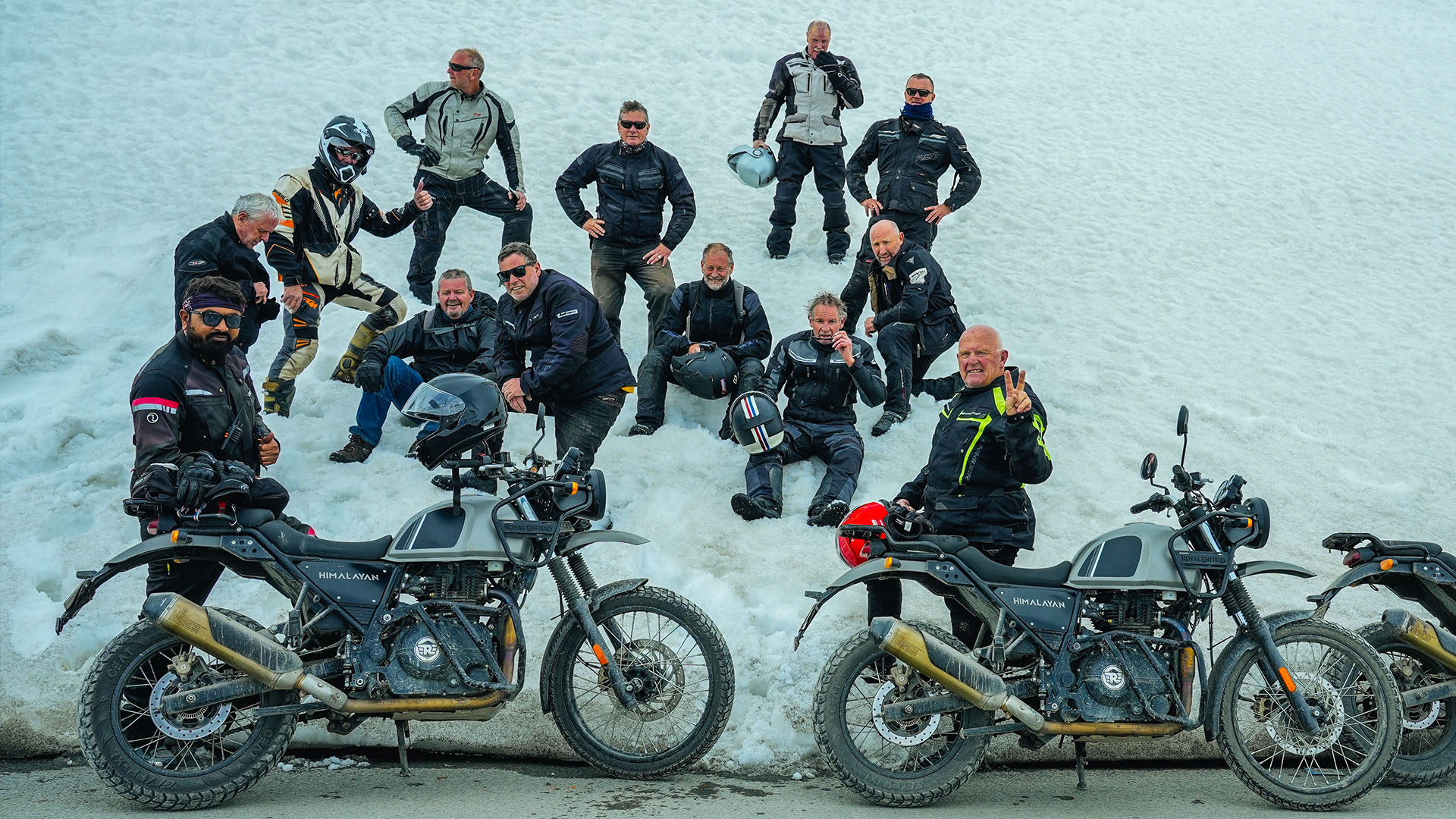
AMS: Prevent It, Don't Fear It
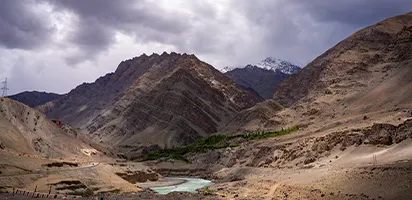
AMS can affect anyone. Our itineraries build in acclimatisation days — and our vehicles carry oxygen.
- We acclimatise in Leh or Kaza before climbing higher — never rush.
- Drink 4–5 litres of water daily; skip alcohol until adjusted.
- Tell your Ride Marshal about symptoms early — descent is the cure.
 Conditioning
Get Ride-Fit Before You Arrive
Riding 200–300km a day over rough terrain works your core, back and neck. A few weeks of prep pays off.
- Planks and core work in the 3–4 weeks before your tour.
- Walking, cycling or light cardio to build stamina for thin air.
- Wrist, forearm and neck stretches at every chai stop.
 Mindset
The Right Mindset for Mountain Roads
In the Himalayas, the mountain sets the schedule. Riders who stay flexible have the best trips.
- Build in patience: our itineraries include buffer time for delays.
- Ride your own ride — never chase a faster rider to keep up.
- Trust your Ride Marshal's call; if they say wait, there's a reason.
Route Planning & Navigation
Offline GPS mapping, mountain weather forecasting, fuel range calculations, and off-road trail handling.
 Off-Road
Reading Himalayan Terrain
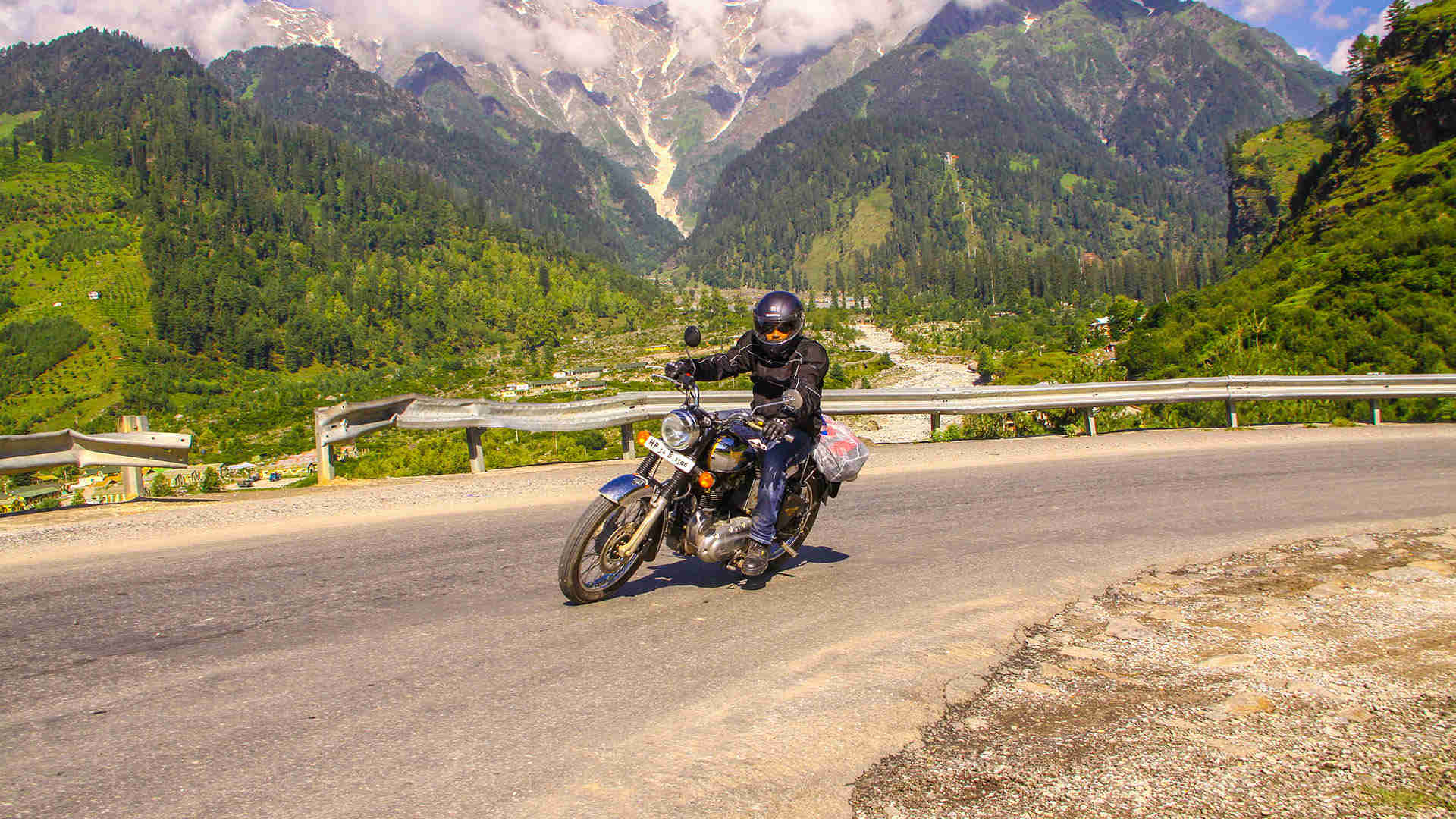
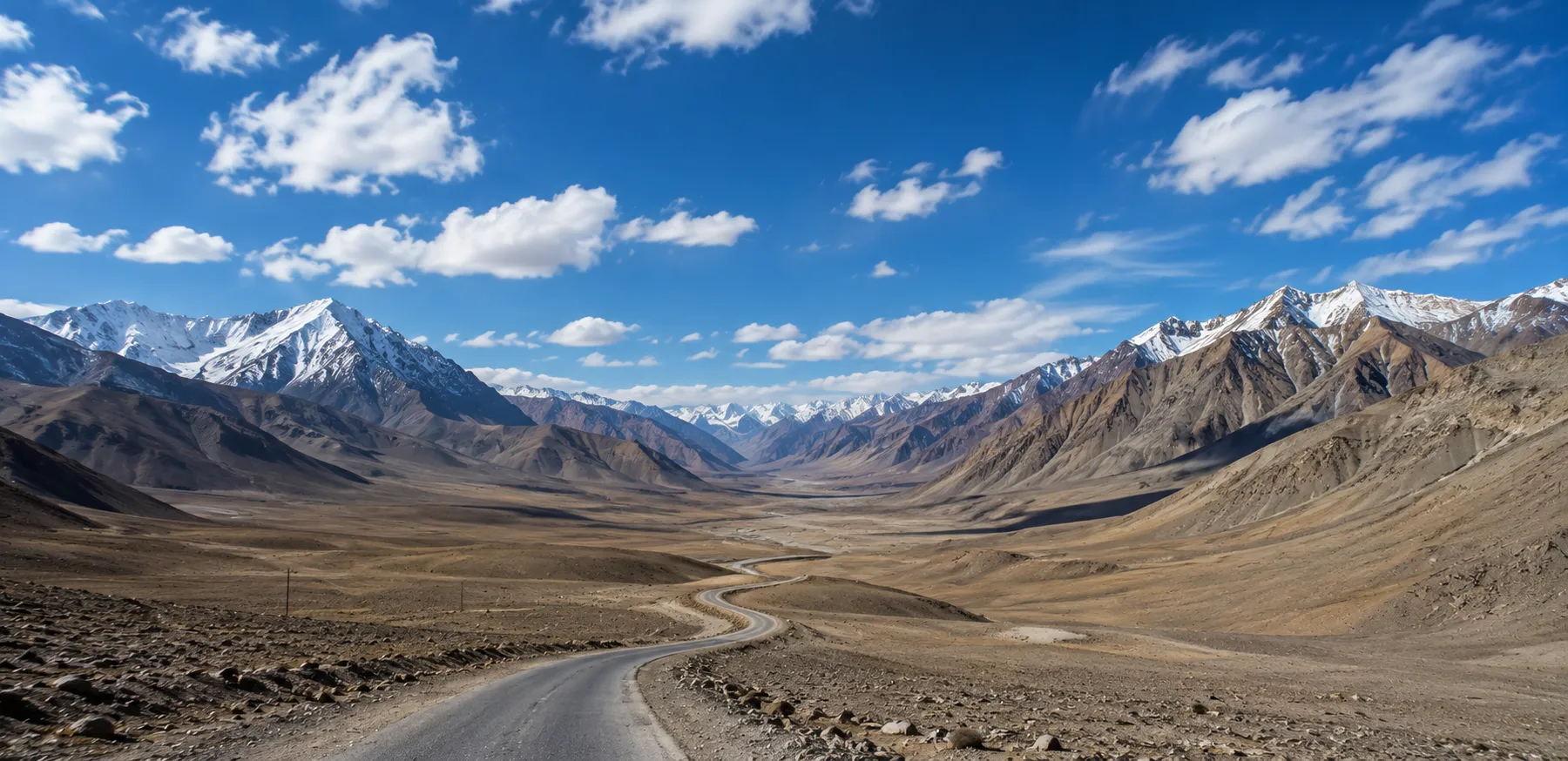
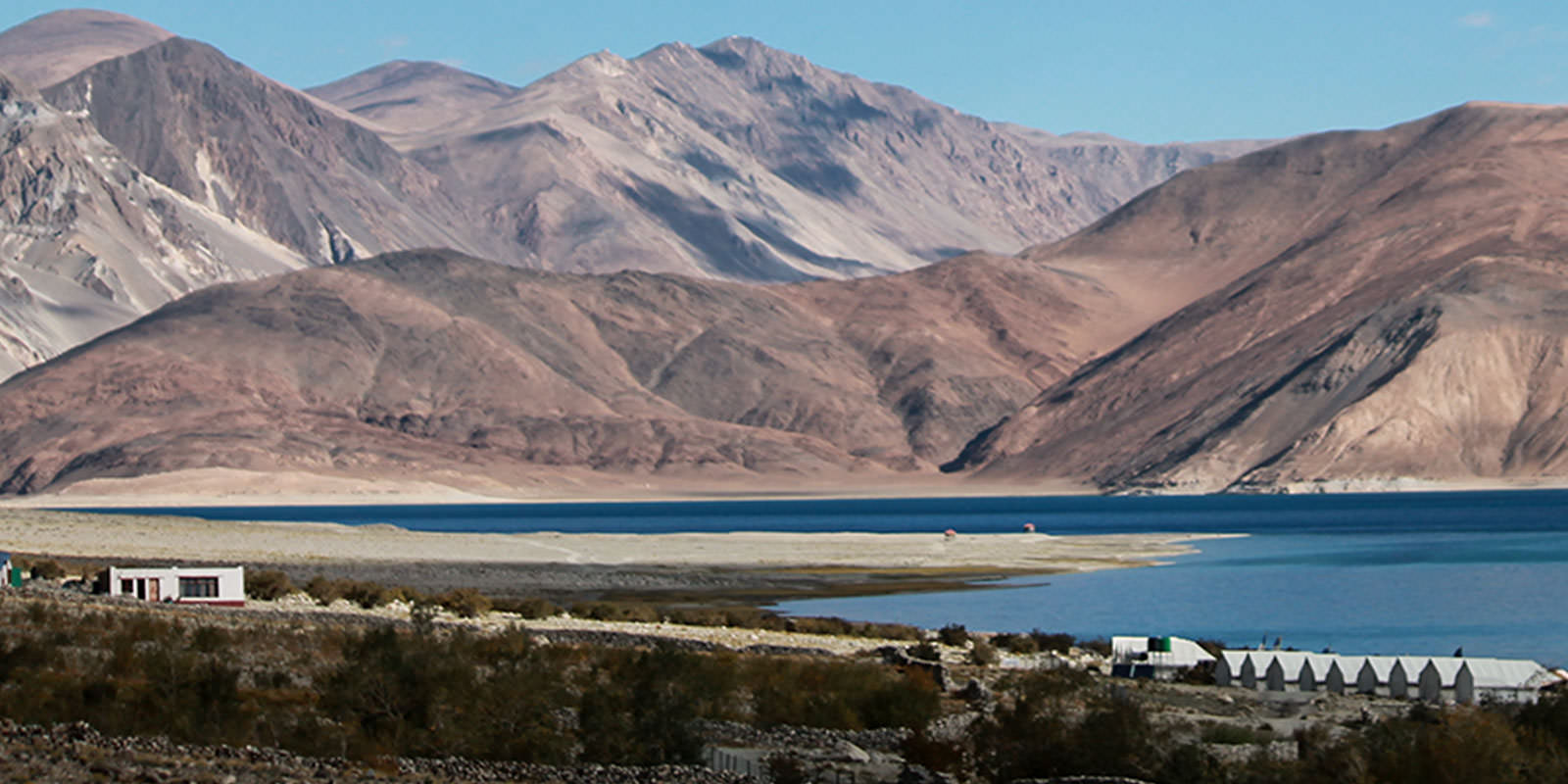
Much of Ladakh, Spiti, Zanskar and Pangi is unpaved. The technique is simple once you know it.
- Stand on the pegs over rough ground to lower your centre of gravity.
- Grip the tank with your knees; keep hands and arms relaxed.
- Look ahead to where you want to go — never down at the wheel.
 Water Crossings
Water Crossings the Right Way
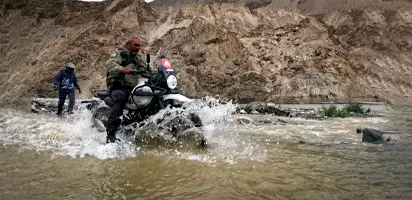
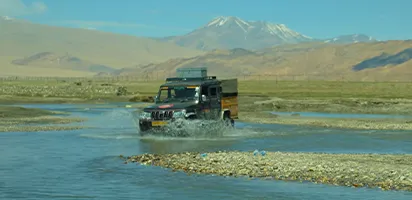
Glacial streams (nallahs) on the Ladakh and Zanskar routes swell through the day as snow melts.
- Cross early morning when water levels are lowest.
- Steady throttle in first or second gear — momentum, not speed.
- Follow the line our support crew shows you.
 Fuel Planning
Fuel, Range & Remote Stretches
Some stretches run 350km+ between pumps. Our van carries reserve fuel — but understand your range.
- Know your bike's real-world range; fill up at every hub town.
- The stretch beyond Tandi toward Leh is one of India's longest gaps.
- Our backup vehicle carries spare fuel — no rider is ever stranded.
Bike Maintenance & Trailside Repairs
Pre-trip T-CLOCS inspections, tyre pressure adjustments, daily chain maintenance, and quick field fixes.
 Daily Checks
What Our Mechanic Checks Every Morning
A ten-minute morning check prevents most breakdowns. On tour our mechanic does this for you.
- Chain lube and slack, especially after a water crossing.
- Engine oil on flat ground; tyre pressure set for the terrain.
- Brakes, lights, and a look for loose bolts after rough sections.
 Your Machine
The Royal Enfield Fleet You'll Ride
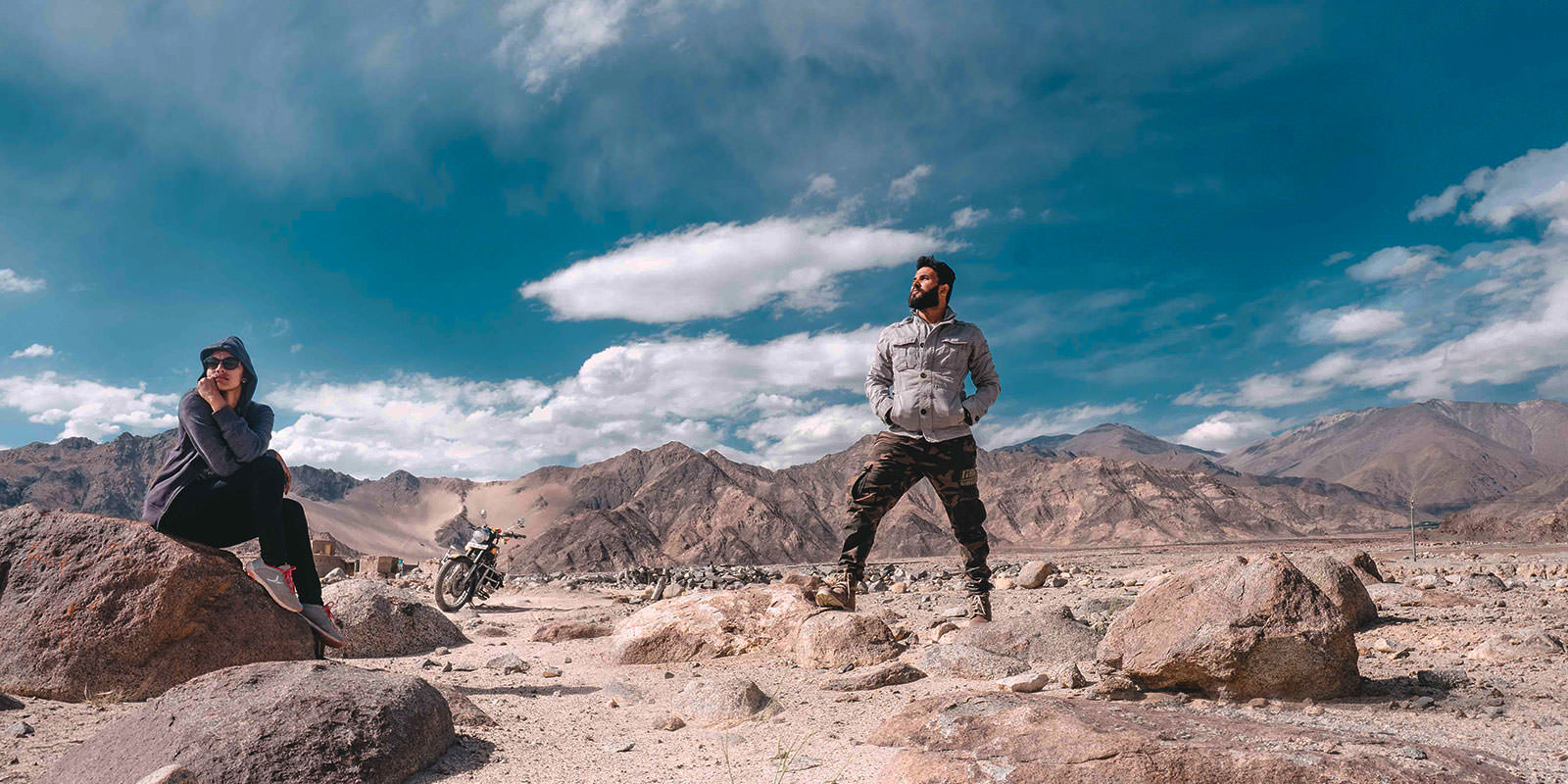
We run a modern, well-maintained Royal Enfield fleet built for this terrain.
- Royal Enfield Himalayan 411cc / 450cc machines for high passes.
- Every bike is fully serviced and inspected before a tour.
- Get familiar with the controls on day one with your Marshal.
 Support
Trailside Know-How (We've Got It Covered)
Punctures happen on any long ride. On our tours they're the mechanic's job — here's what's worth knowing.
- A tubeless puncture can usually be plugged trailside in minutes.
- Our van carries spares, tools and a full mechanic's kit.
- If a bike can't continue, it's loaded onto the vehicle immediately.
Safety & Security Protocols
Preventing Acute Mountain Sickness (AMS), first response protocols, satellite communicators, and cornering safety.
 Riding Safety
Mountain Road Etiquette & Blind Corners
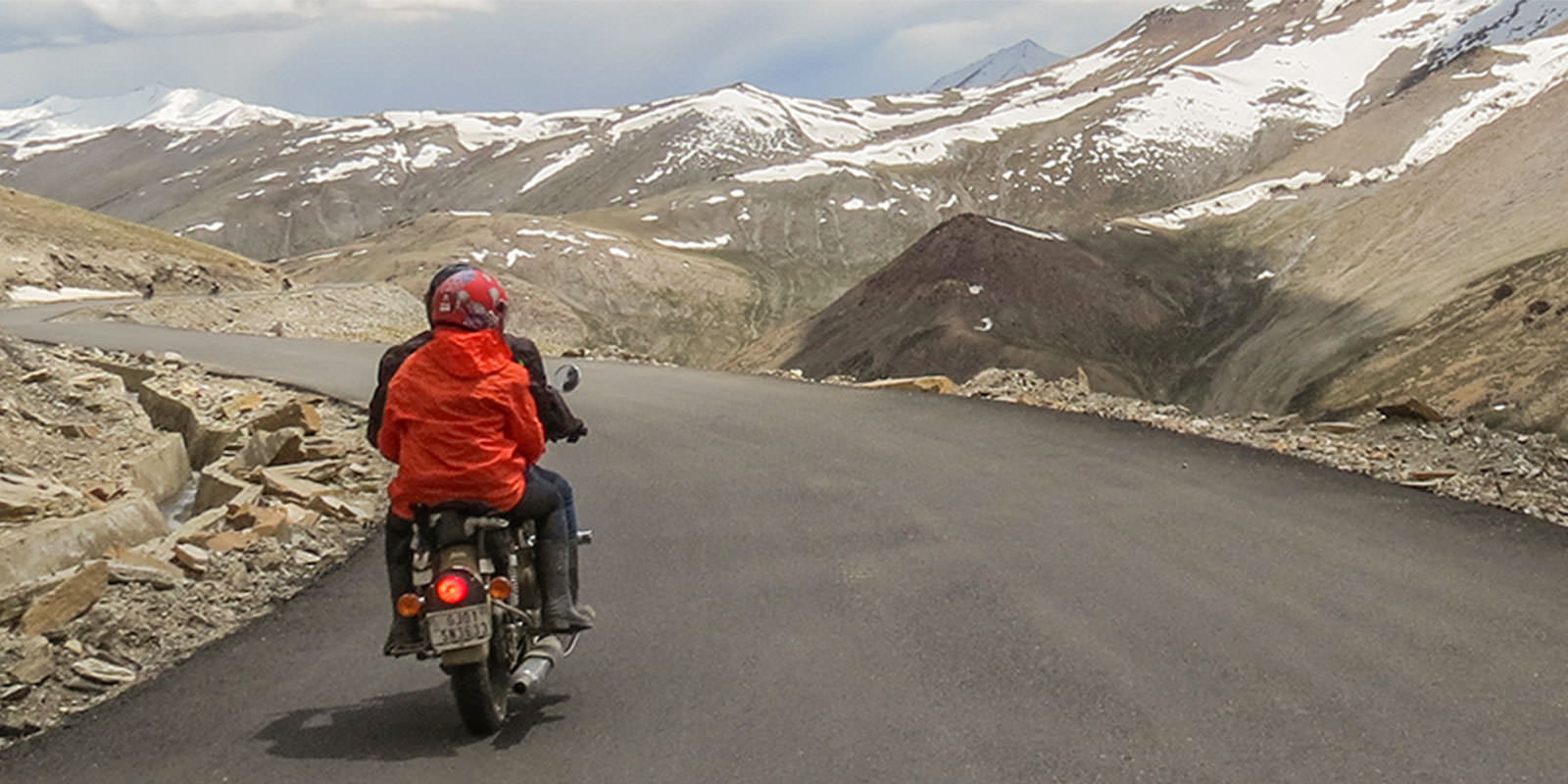
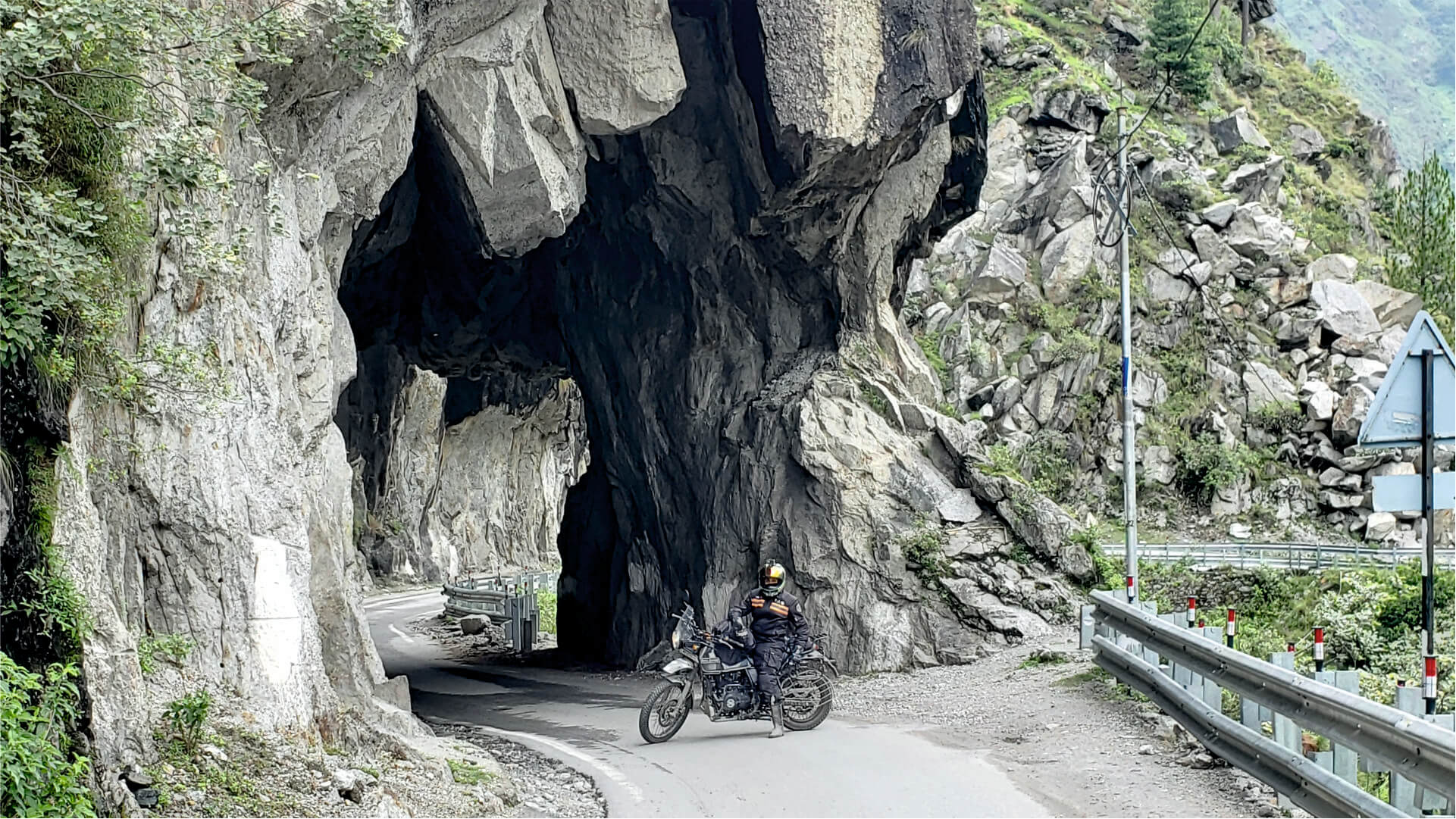
Himalayan roads are narrow, blind and shared with trucks and army convoys. A few rules keep everyone alive.
- Hold your lane on blind curves; uphill traffic has right of way.
- Sound your horn before blind corners; never overtake on them.
- Watch for gravel, ice patches and livestock on the outer edge.
 Communication
Staying Connected in No-Network Zones
Signal disappears for days in remote valleys. Our tours are lead-and-sweep coordinated so no one rides alone.
- Only postpaid Indian SIMs work in Ladakh (Jio/Airtel best).
- Share your itinerary with family before you lose signal.
- Our Marshal and sweep rider keep the group together at all times.
 Alertness
Managing Fatigue & Staying Sharp
Fatigue slows reactions faster than most riders realise. Our pace and stops keep you fresh.
- Regular breaks every 60–90 minutes — built into every day.
- Hydrate constantly and eat light; heavy meals cause drowsiness.
- If you're tired, tell your Marshal — the van seat is always there.
Group Riding Etiquette & Formation
Staggered riding formations, lead/sweep rider duties, intercom setup, and support vehicle coordination.
 Formation
How a Dream Riders Convoy Rides
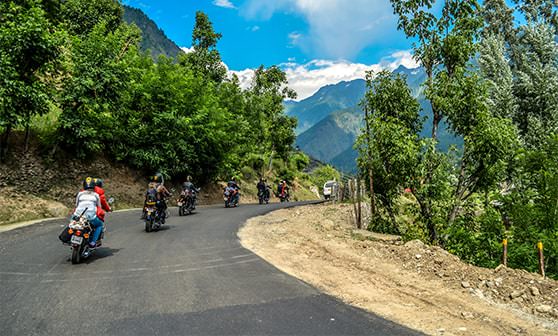
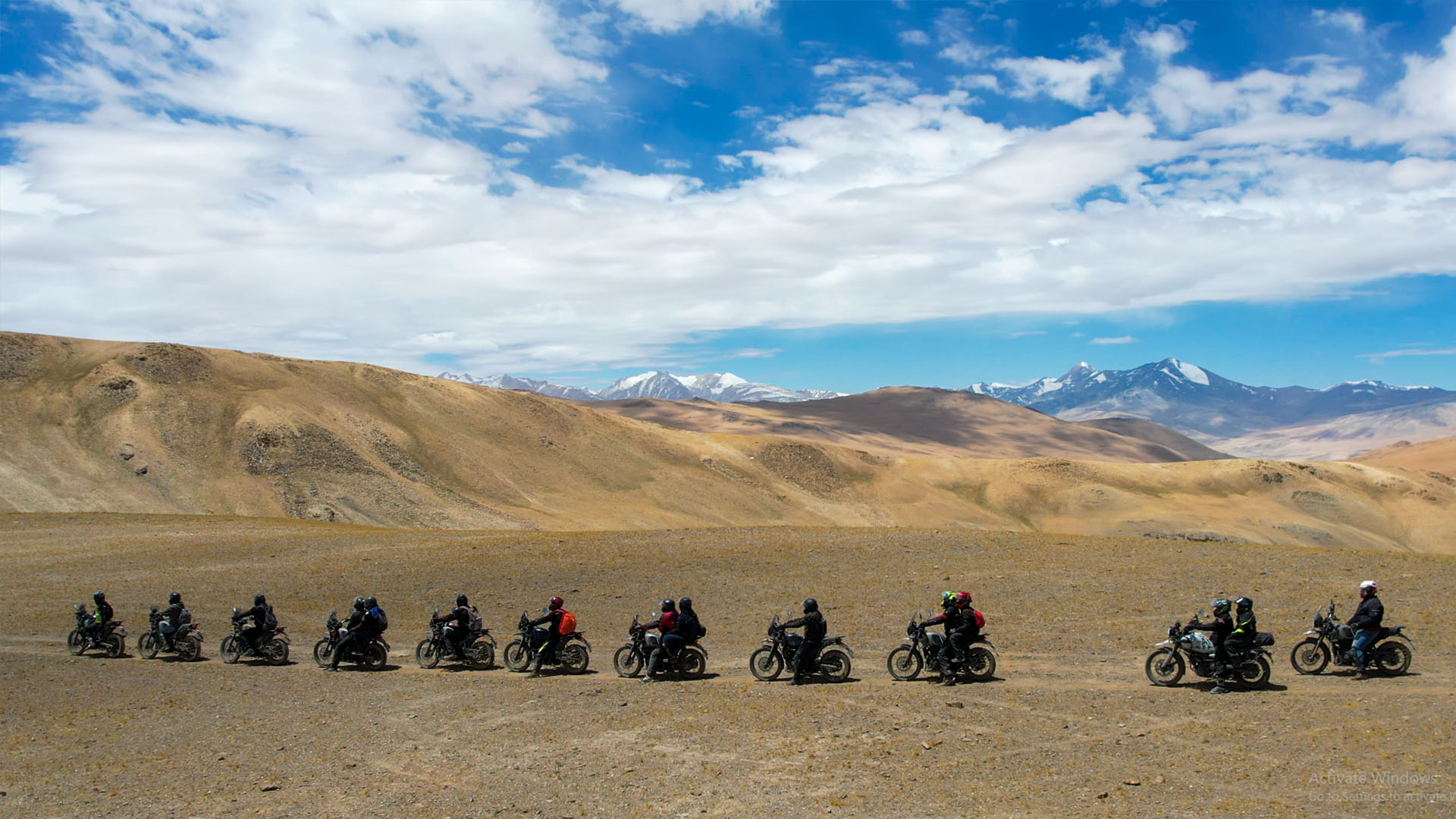
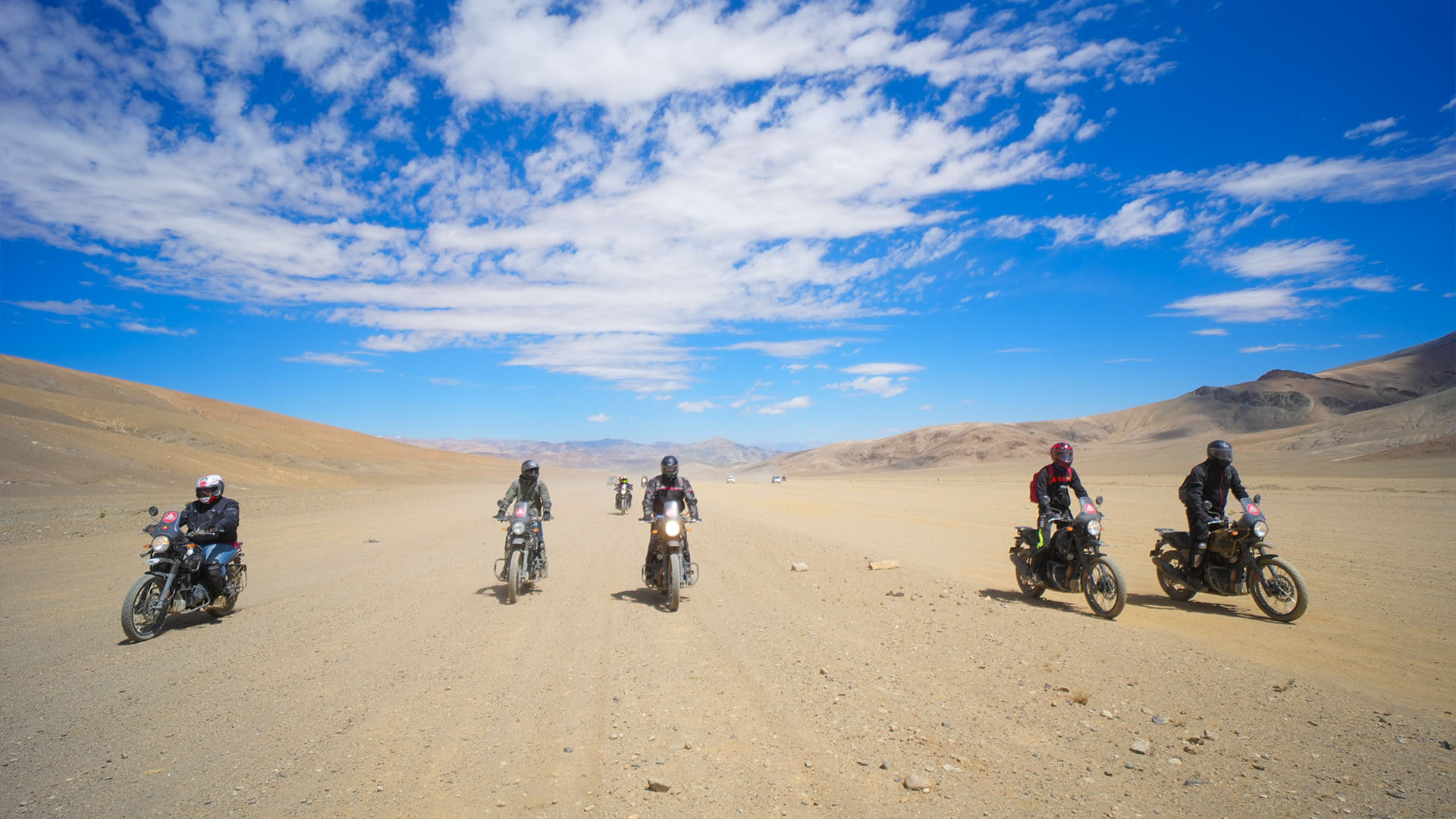
Every expedition runs lead-and-sweep: a Ride Marshal up front, an experienced sweep rider at the back.
- Staggered formation on open roads, single-file on the twisties.
- Keep the rider behind you in your mirror — never drop them.
- Wait at every turn and junction until the group regroups.
 Backup Van
Riding with 4x4 Backup Support
Our support vehicle is your safety net — luggage, spares, fuel, oxygen, first-aid and a spare seat.
- Your heavy luggage rides in the van; you ride light and free.
- The van carries spare fuel, oxygen, tools and medical supplies.
- A struggling rider or bike can always join — no judgement.
 Code of Conduct
Group Signals & Shared Respect
A good group looks after each other. Simple habits make the whole ride smoother and safer.
- Learn the standard hand signals for hazards, fuel and stops.
- Never ride beyond your comfort to keep up with faster riders.
- Look out for your fellow riders — that camaraderie is what lasts.
Local Culture, Cash & Border Permits
Inner Line Permits (ILP), eco-fees, local monastery etiquette, and cash reserves in offline mountain towns.
 Permits
Inner Line Permits & Border Zones
Restricted areas like Nubra, Pangong, Umling La and parts of Spiti need Inner Line Permits. We arrange these.
- Chang La and other high zones enforce a 48-hour permit window — timing matters.
- Carry your original passport/ID plus printed permit copies.
- Foreign and Indian riders follow different processes; we handle both.
 Cash Safety
Cash, UPI & Remote Payments
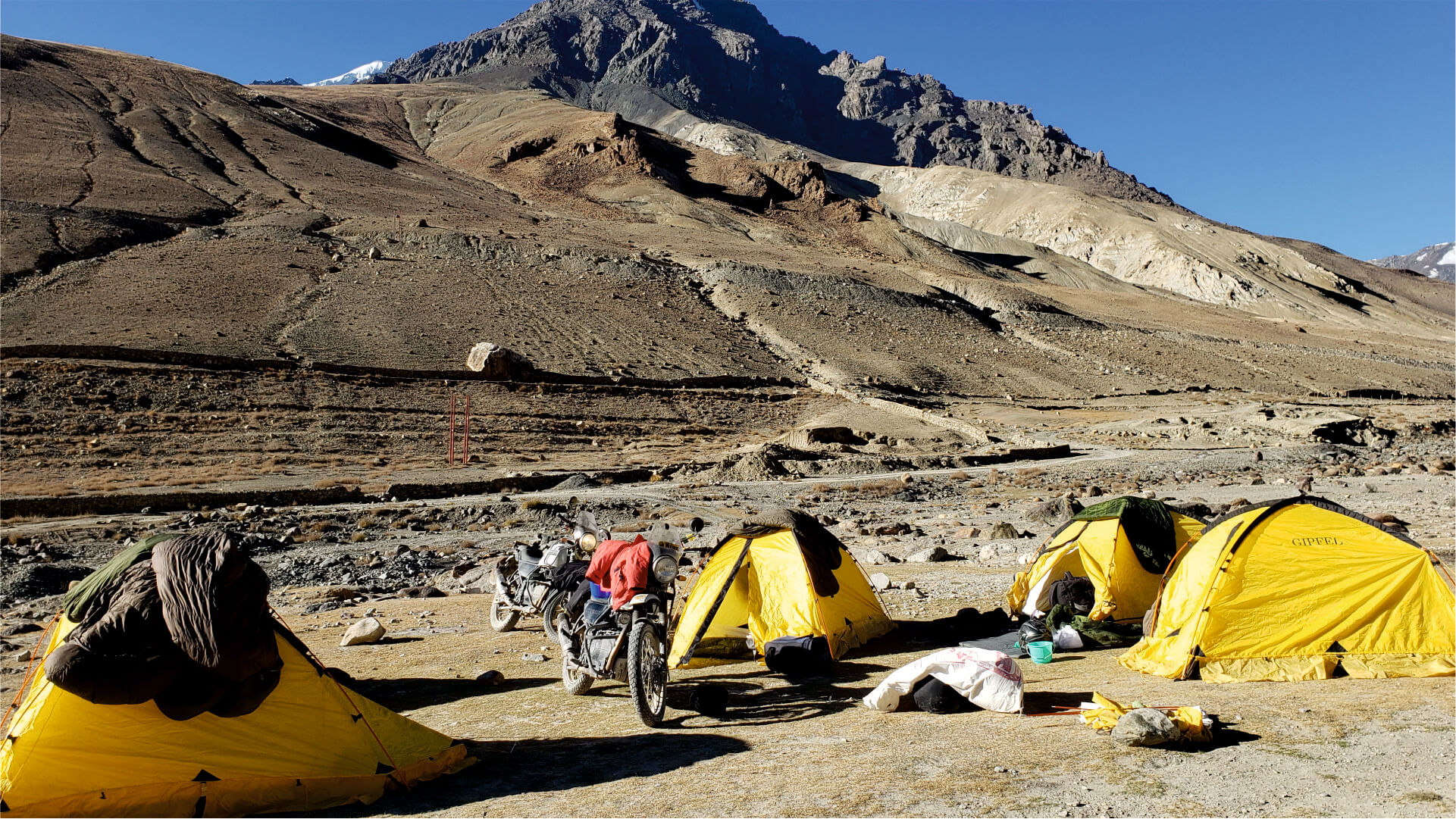
Card machines and UPI fail constantly when the mountain network drops. Always carry cash.
- Withdraw enough in hub towns — Leh, Manali, Srinagar, Kaza.
- Split your cash across two or three places, not one wallet.
- Keep small notes for chai stalls, homestays and tips.
 Culture & Eco
Monastery Etiquette & Leave No Trace
These fragile communities have hosted riders for generations. Ride like a guest, not a tourist.
- Walk clockwise around chortens, mani walls and prayer wheels.
- Always ask before photographing monks, locals or interiors.
- Carry out every scrap of plastic — leave the mountains as you found them.
When to Ride: A Season Guide to Every Destination
The right month makes all the difference. Here's the ideal riding window for every Dream Riders destination.
| Destination | Best Riding Window | What to Expect |
|---|---|---|
| Ladakh | Jun – Sep |
Passes fully open, clear skies; July–August is peak riding season. |
| Spiti Valley | May – Oct |
Kaza accessible; river crossings run highest in August. |
| Zanskar | Jul – Sep |
A short, raw window into one of the remotest Himalayan valleys. |
| Pangi Valley | Jun – Sep |
Rugged, off-beat trails and gloriously crowd-free mountain passes. |
| Tawang | Mar–May & Oct–Nov |
Best light and driest roads; ideal to avoid heavy monsoon downpours. |
| Meghalaya | Oct – Apr |
Lush post-monsoon greenery, roaring waterfalls, and living root bridges. |
| Rajasthan | Oct – Mar |
Cool desert riding, royal heritage forts; skip the fierce summer heat. |
| South India | Oct – Mar |
Pleasant post-monsoon coastal curves and tea plantations through Kerala & the hills. |
| Bhutan | Mar–May & Sep–Nov |
Clear Himalayan views, pristine dzongs, and vibrant festivals (tsechus). |
| Nepal (Mustang) | Mar – Nov |
Rain-shadow region in Mustang — rideable and breathtaking even through monsoon. |
| Sri Lanka | Nov – Apr |
Beaches, tea plantations, and scenic hill country at their best. |
| Vietnam | Sep–Nov & Mar–May |
The Ha Giang Loop and northern mountain passes at their most spectacular. |
Pre-Ride Essential Checklist
Tick every box before departure. On our guided tours we double-check the bike side for you — this keeps the rest covered.
Bike & Mechanical
- Engine oil level & filter
- Brake pads & fluid
- Chain cleaned, lubed & set
- Tyre tread & pressure
- Inspected on Tour
Riding Armour & Gear
- ECE/DOT helmet + Pinlock
- CE armour jacket & pants
- Waterproof riding boots
- All-weather gloves (warm + rain)
- Merino base layers
Health & Emergency
- Personal medication & first-aid
- AMS awareness (ask for our briefing)
- Hydration / ORS electrolytes
- Pulse oximeter & sunscreen
- Emergency contacts printed
Documents & Cash
- Driving licence & bike RC
- Valid insurance & PUC
- Inner Line Permits (5 copies)
- Emergency cash (small notes)
- Offline maps downloaded
Frequently Asked Questions
Straight answers to what riders ask us most before they book.
Turn Your Riding Dreams Into Reality
You've done the reading — now let us handle the rest. Ride Ladakh, Spiti, Zanskar, Pangi, Tawang, Meghalaya, Rajasthan, South India, Bhutan, Nepal, Sri Lanka or Vietnam with expert Ride Marshals, a dedicated mechanic and full 4x4 backup support. Seventeen years, 10,000+ riders, and a TripAdvisor Travellers' Choice award three years running. Your only job is to enjoy the road.