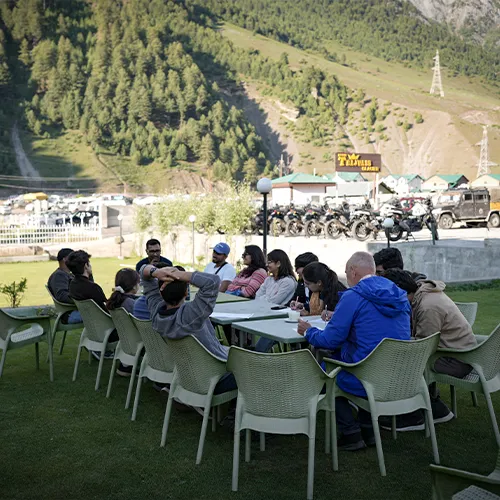
AMS can affect anyone. Our itineraries build in acclimatisation days — and our vehicles carry oxygen.
Key Riding Guidance & Highlights
Acute Mountain Sickness is the one risk on a Himalayan tour that has nothing to do with riding skill — it can affect the fittest rider and spare the least fit. The good news: it's very manageable when you respect it, and our itineraries are built around exactly that.
How we design for it
- Acclimatisation days built in — we rest in Leh (around 3,500m) or Kaza before climbing to the big passes
- Oxygen carried in the support vehicle
- Ride Marshals trained to spot symptoms early
What you should do
- Hydrate hard — 4 to 5 litres of water a day
- Skip alcohol and heavy exertion for the first 48 hours
- Ascend gradually; never rush the first two days
Know the signs
Headache, nausea, dizziness, breathlessness at rest, and poor sleep. Mild symptoms are common — tell your Marshal early. If symptoms are severe or worsening, descent is the only sure cure, and we will always prioritise it. Never hide how you feel to push through.
Our tip: Ask our team for our free Altitude & AMS Field Briefing before you travel on your Himalayan Bike Tour, and consult your doctor about preventive medication.