



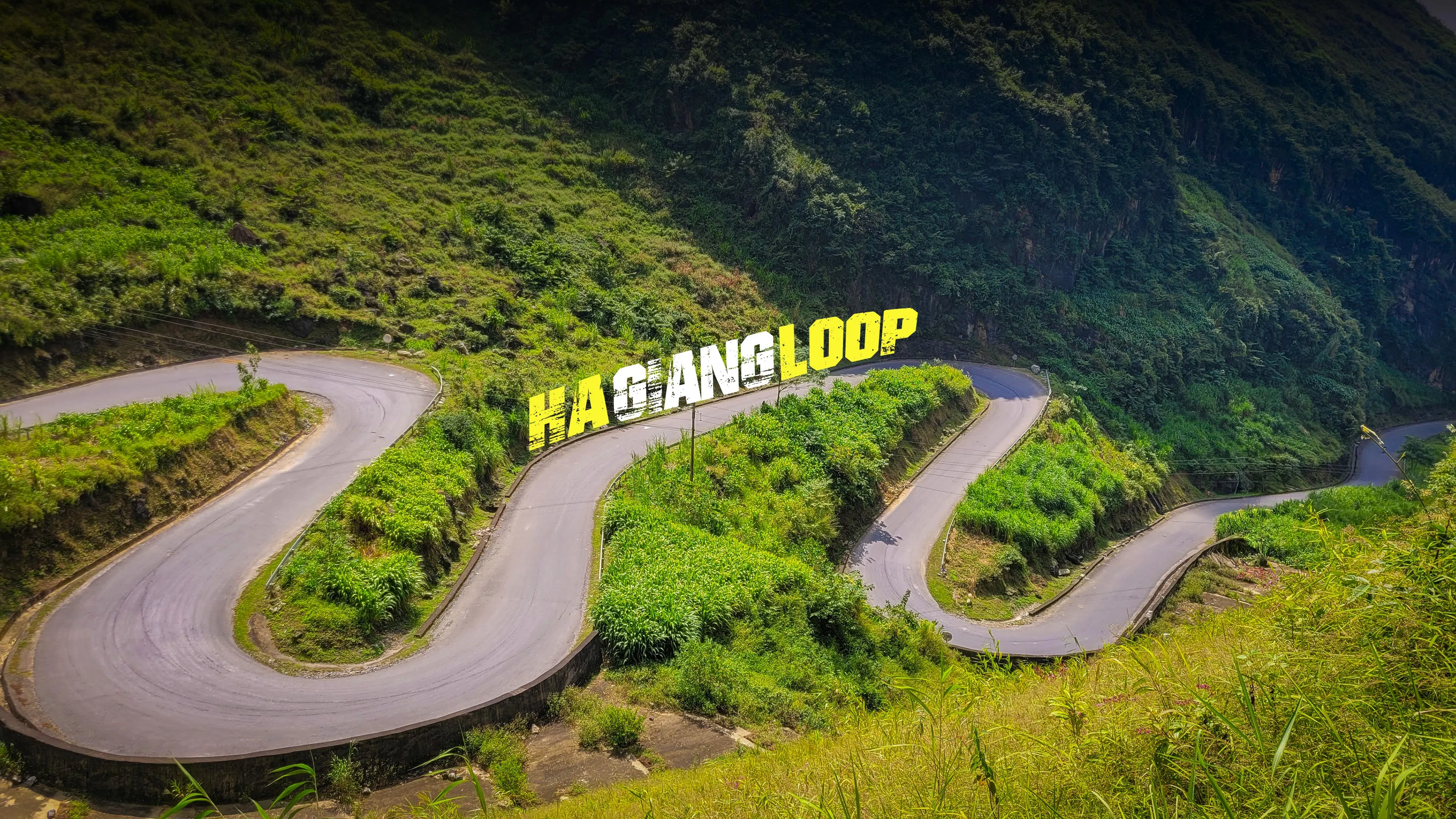
Ha Giang Loop
Northern Vietnam offers a completely different side of the country for travellers who prefer to explore from the seat of a motorcycle. Beyond the busy streets of Hanoi are quiet lakes, winding mountain roads, limestone peaks, traditional villages, remote valleys and some of the most spectacular landscapes in Southeast Asia.
A Vietnam Motorcycle Tour through northern Vietnam brings these landscapes together through a route designed for riders who want both adventure and cultural experiences. Starting and ending in Hanoi, the journey travels through Vu Linh, Ha Giang, Dong Van, Bao Lac, Ban Gioc Waterfall and Bac Son, creating a varied riding experience across northern Vietnam.
One of the major highlights is the famous Ha Giang Loop, where dramatic mountain roads, high passes and deep valleys create some of the country's most memorable riding. But this journey goes beyond Ha Giang. It also takes riders towards Ban Gioc Waterfall and Bac Son, allowing them to experience several different landscapes within one journey.
For international riders planning a travel itinerary Vietnam adventure, this route combines challenging roads, natural scenery, local communities and the freedom of travelling through the mountains by motorcycle.
Why Northern Vietnam Is Ideal for Motorcycle Touring
Northern Vietnam is particularly rewarding on two wheels because the landscape changes continuously.
Leaving Hanoi, riders gradually move from the busy urban environment into rural countryside. Roads become quieter, mountains begin to appear on the horizon and agricultural landscapes replace city buildings.
Further north, the terrain becomes more dramatic. Mountain roads wind through limestone formations, valleys and remote settlements. The riding itself becomes an important part of the experience rather than simply a way of travelling between attractions.
A motorcycle also allows riders to stop more easily at viewpoints, small villages and roadside locations that may otherwise be missed when travelling by conventional transport.
The result is a journey where the road, landscape and local culture are experienced together.
From Hanoi to the Northern Mountains
Hanoi is the natural starting point for exploring northern Vietnam.
Vietnam's capital combines historic neighbourhoods, traditional architecture, cafés, markets and modern city life. It provides a strong contrast to the remote mountain areas that follow.
Once the journey leaves Hanoi, the surroundings gradually become more rural. Agricultural areas, villages and forested hills replace the dense traffic and buildings of the capital.
The route towards Vu Linh introduces riders to a quieter side of northern Vietnam.
Vu Linh is located around Thac Ba Lake, an extensive freshwater landscape surrounded by hills and rural communities. The area is known for its natural environment and ethnic diversity.
For a motorcycle traveller, this section provides a gradual transition from city riding to the more remote roads ahead.
Vu Linh and Thac Ba Lake
Thac Ba Lake is one of northern Vietnam's important natural landscapes, with numerous islands and forest-covered hills surrounding its waters.
The Vu Linh region is also home to local communities whose traditional lifestyles remain closely connected with agriculture and the surrounding environment.
Spending time in this area gives riders an opportunity to experience a slower pace of life before continuing towards the mountains of Ha Giang.
For travellers interested in cultural experiences, this part of the route can be just as meaningful as the major mountain passes later in the journey.
Ha Giang: Gateway to the Mountain Roads
As the route continues north, the terrain becomes increasingly mountainous and eventually reaches Ha Giang.
Ha Giang is one of Vietnam's most famous motorcycle destinations and serves as the gateway to the Ha Giang Loop.
The region is known for spectacular limestone mountains, deep valleys, winding roads and diverse ethnic communities. Unlike a conventional tourist destination where attractions are concentrated in one location, Ha Giang is experienced through the journey itself.
The road repeatedly climbs and descends through the mountains, creating changing views around almost every bend.
This makes Ha Giang particularly attractive to riders who enjoy technical mountain roads and scenic riding rather than simply travelling from one attraction to another.
The Ha Giang Loop Experience
The Ha Giang Loop is not a single road. It is a network of mountain routes connecting different towns and districts in the northernmost part of Vietnam.
The landscape changes dramatically throughout the region. Riders can encounter steep limestone cliffs, agricultural terraces, deep valleys, traditional villages and mountain passes within the same riding day.
The famous Dong Van region is part of this extraordinary landscape.
The Dong Van Karst Plateau is recognised as a UNESCO Global Geopark and is one of the most distinctive geological landscapes in Vietnam. Its limestone formations and high mountain terrain create the setting for some of the most memorable riding on the route.
For riders, the attraction is not just the destination but the continuous combination of road, landscape and elevation.
Ma Pi Leng Pass: A Highlight for Riders
Among the most famous sections of the Ha Giang Loop is Ma Pi Leng Pass.
The road runs through an imposing mountain landscape between Dong Van and Meo Vac. From elevated viewpoints, riders can see steep limestone cliffs, deep valleys and the Nho Que River far below.
Ma Pi Leng is one of those places where the motorcycle becomes part of the experience. The winding road, mountain scenery and changing perspective make the ride memorable even before reaching the viewpoint.
However, the road should be approached with respect.
Mountain bends can be tight, visibility can change and weather conditions may affect road surfaces. Riders should maintain controlled speeds, leave sufficient distance from other vehicles and avoid stopping in unsafe locations.
The objective is to enjoy the landscape without compromising safety.
Dong Van and Mountain Culture
Dong Van provides an opportunity to experience the cultural side of northern Vietnam.
The surrounding region is home to several ethnic communities, with traditional architecture, clothing, markets and agricultural practices adding another dimension to the motorcycle journey.
The mountains are not empty wilderness. They are home to communities that have adapted to challenging terrain over generations.
Travellers should therefore approach local villages respectfully. Asking permission before photographing people, respecting private property and following local customs are important parts of responsible travel.
For international riders, these encounters often become some of the most memorable moments of a Vietnam Motorcycle Tour.
From Dong Van to Bao Lac
The route then continues towards Bao Lac, taking riders through another section of northern Vietnam's mountainous landscape.
This part of the journey is less about a single headline attraction and more about experiencing the road itself.
Small settlements, cultivated slopes, valleys and mountain roads appear throughout the journey. The scenery continues to change as the route moves away from the highest areas of the Ha Giang region.
Bao Lac also provides a useful contrast to the more famous destinations on the route. It allows riders to experience a quieter side of northern Vietnam, away from some of the region's busiest tourist stops.
Ban Gioc Waterfall
One of the major natural highlights of this travel itinerary Vietnam journey is Ban Gioc Waterfall in Cao Bang Province.
Located near the Chinese border, Ban Gioc is famous for its broad cascade surrounded by green mountains and limestone scenery.
The waterfall is impressive not only because of its size but also because of its setting. The surrounding mountains create a dramatic natural backdrop, making the area particularly rewarding for photographers and nature lovers.
Reaching Ban Gioc by motorcycle adds another dimension to the experience. The roads through Cao Bang provide opportunities to experience rural landscapes and mountain scenery along the way.
For riders, the destination becomes part of a larger adventure rather than simply a sightseeing stop.
Bac Son Valley
After Ban Gioc, the route continues towards Bac Son, another distinctive landscape in northern Vietnam.
Bac Son is known for its broad valley surrounded by limestone mountains. From elevated viewpoints, the valley reveals agricultural fields, villages and surrounding peaks.
The landscape is different from the dramatic high mountains around Ha Giang, giving the journey a welcome change of scenery.
The agricultural character of Bac Son also provides insight into rural life in northern Vietnam. Rice cultivation, villages and traditional homes form part of the landscape.
For motorcycle travellers, this is another example of why exploring Vietnam by road can be more rewarding than simply visiting isolated attractions.
What Is Riding in Northern Vietnam Like?
A Vietnam Motorcycle Tour through this region should not be treated like a relaxed highway holiday.
Mountain riding requires concentration and adaptability.
Riders may encounter:
-
Tight bends and hairpin turns
-
Steep climbs and descents
-
Changing road surfaces
-
Local traffic
-
Rain and mist
-
Road construction
-
Uneven sections
-
Limited facilities in remote areas
Road conditions can also change with weather.
Rain may reduce visibility and make surfaces slippery, particularly on mountain sections. Riders should adjust their speed to the conditions rather than relying only on the planned schedule.
Another important consideration is travel time. A relatively short distance on a map can take much longer than expected because of winding roads, elevation changes, traffic and scenic stops.
A good motorcycle journey therefore requires flexibility.
Best Time for a Vietnam Motorcycle Tour
Northern Vietnam experiences several distinct seasons, and each can offer a different riding experience.
March to May can bring comfortable riding conditions and increasingly green landscapes.
June to August is generally warmer and wetter. Rainfall can affect mountain roads and visibility, so riders should be prepared for changing conditions.
September to November is often attractive for motorcycle travel, with cooler conditions and scenic mountain landscapes.
October to December can also be a particularly interesting period for travellers interested in seasonal flowers and changing agricultural landscapes.
The best time ultimately depends on the rider's preferences and current weather conditions.
What to Pack for the Ride
Packing efficiently is important when travelling by motorcycle.
Essential riding equipment should include a properly fitted helmet, riding gloves, protective jacket, suitable trousers and riding footwear.
A waterproof layer is also highly recommended because mountain weather can change quickly.
Other useful items include:
-
Sunscreen
-
Sunglasses
-
Personal medication
-
Reusable water bottle
-
Power bank
-
Phone and charging equipment
-
Passport and travel documents
-
Small personal day bag
-
Some Vietnamese cash
Avoid carrying unnecessary luggage. Keeping personal belongings compact makes motorcycle travel more comfortable and practical.
Food, Communities and Local Experiences
One of the strongest reasons to explore northern Vietnam by motorcycle is the opportunity to experience the country beyond its major cities.
Food varies across the regions, and local markets provide opportunities to discover dishes that may not be commonly found in international restaurants.
The route also passes through communities with different ethnic traditions and lifestyles.
Travellers should remember that these are living communities rather than tourist displays. Responsible behaviour, respectful photography and consideration for local customs help preserve the authenticity of the experience.
For many international riders, these cultural encounters become just as memorable as the mountain roads.
Why This Route Stands Out
This route offers a broader northern Vietnam experience than focusing only on the Ha Giang Loop.
It connects several distinct environments:
Hanoi brings history and urban culture.
Vu Linh introduces lakes, forests and rural communities.
Ha Giang brings dramatic mountain riding.
Dong Van and Ma Pi Leng provide some of the most spectacular scenery in northern Vietnam.
Bao Lac offers quieter mountain landscapes.
Ban Gioc Waterfall adds one of the region's most impressive natural attractions.
Bac Son provides a final change of scenery through its agricultural valley and limestone mountains.
Together, these destinations create a varied travel itinerary Vietnam riders can experience from the motorcycle seat.
Plan Your Vietnam Motorcycle Tour
Ready to experience northern Vietnam on two wheels? Plan your Vietnam Motorcycle Tour with Dream Riders and explore the mountain roads of Ha Giang, ride across Ma Pi Leng Pass, discover the landscapes around Dong Van and Bao Lac, experience Ban Gioc Waterfall and ride through the scenic Bac Son Valley. With the right preparation, route planning and local support, northern Vietnam can become more than a destination—it can become a memorable riding experience.
Frequently Asked
Questions
01 What is the Ha Giang Loop?
The Ha Giang Loop is a network of scenic mountain roads in northern Vietnam, known for limestone peaks, deep valleys, winding passes, traditional villages and spectacular riding landscapes.
02 What other destinations can be included in a Northern Vietnam motorcycle tour?
A wider route can include destinations such as Hanoi, Vu Linh and Thac Ba Lake, Ha Giang, Dong Van, Bao Lac, Ban Gioc Waterfall and Bac Son.
03 What should I pack for the Ha Giang Loop?
Riders should carry proper protective riding gear, a waterproof layer, gloves, suitable footwear, sunscreen, personal medication, travel documents, a power bank, water and a small personal day bag.
04 Is the Ha Giang Loop difficult to ride?
The route includes mountain bends, steep sections, changing road surfaces and variable weather. Riders should be comfortable with mountain riding, maintain controlled speeds and adapt their riding to road and weather conditions.
05 How can I plan a Vietnam Motorcycle Tour through northern Vietnam?
Start by choosing the right season, route and motorcycle, then plan accommodation, permits or required documents, riding equipment and support. A professionally organised tour can also help with route planning, local logistics and motorcycle support.
Popular Post
-
Sri Lanka tour packages
Sri Lanka is a destination that offers an incredible mix of tropical beaches, lush mountains, ancient heritage sites, vibrant cult ....Read More -
Adventure Activities in Bhutan
Bhutan is often known for its peaceful monasteries, breathtaking Himalayan landscapes, and rich Buddhist culture. However, beyond ....Read More -
Heritage Motorcycle Tour India
India is a land where every road tells a story. Ancient forts stand proudly on hilltops, colorful bazaars echo centuries-old tradi ....Read More -
Ooty
Tucked away in the heart of the Nilgiri Hills, Ooty is one of South India's most enchanting hill stations. Officially known as ....Read More -
Best Places to Visit in Nepal
Nepal is a country where ancient traditions, spiritual landmarks, majestic mountains, and thrilling adventures come together to cr ....Read More -
Tawang Tourism
Located at an altitude of over 10,000 feet in the Eastern Himalayas, Tawang is one of India's most spectacular mountain destin ....Read More